
Does homeowners insurance cover slab leaks? What DFW homeowners need to know.
Most slab leak claims on older DFW homes get denied. Here is what your policy actually covers, two cheap add-ons that fill the gap, and what to say when you call your agent today.

Updated May 2026
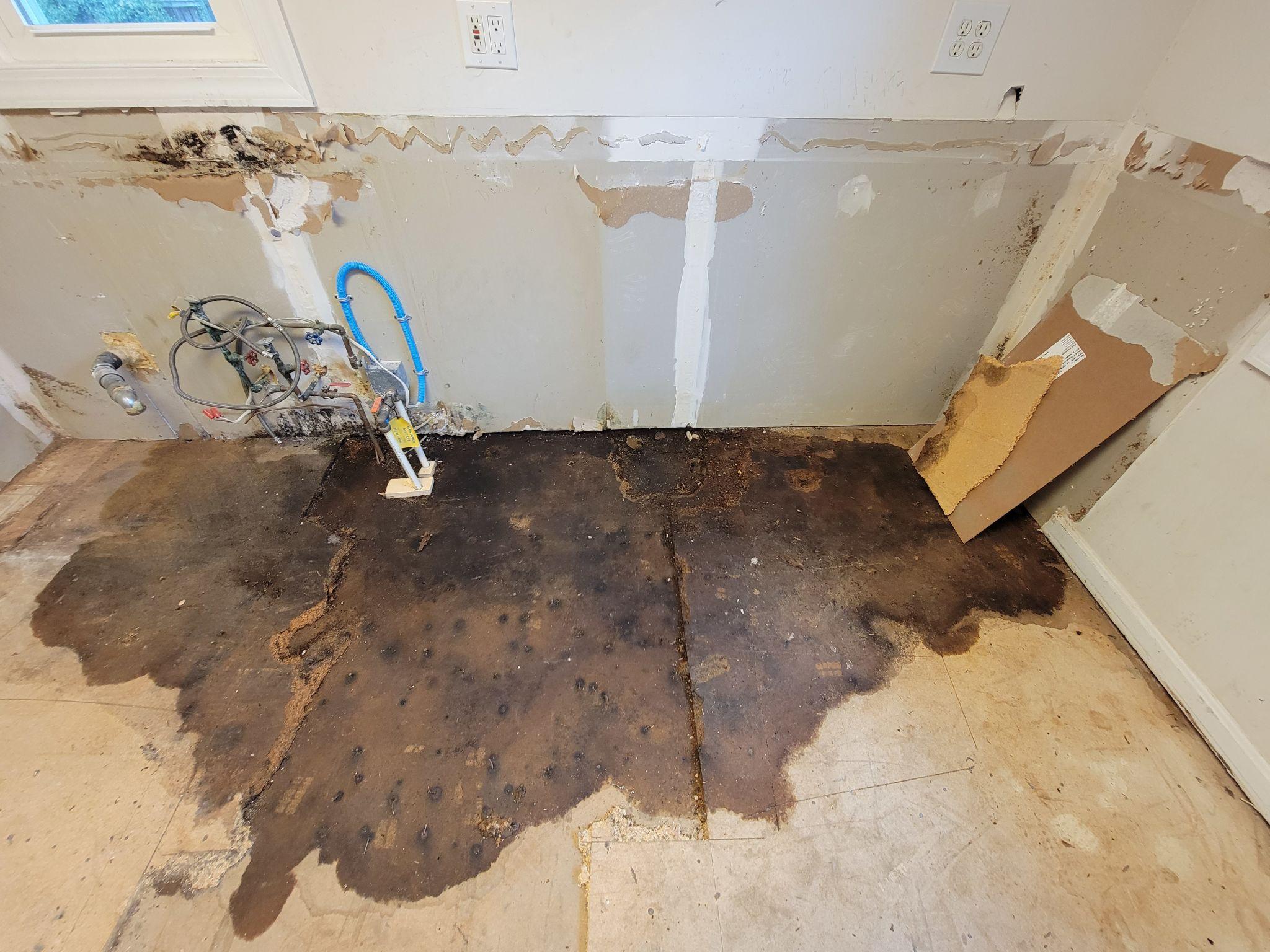
You found water where it should not be. Maybe it is a warm spot on the slab in your hallway. Maybe your water bill doubled last month and you have no idea why. Maybe your plumber just told you the words no homeowner wants to hear: “You have a slab leak.”
Your next thought was probably, “Insurance will cover this, right?”
Here is the short answer: probably not the way you think it will. Standard homeowners insurance only covers damage that is “sudden and accidental.” Pipes corroding under your foundation for 20 years? That is wear and tear, and your policy specifically excludes it. Even when a claim is approved, insurance usually pays to repair the water damage (floors, drywall, cabinets) but not the pipe itself. You fix the symptom, not the cause.
The good news: there are two cheap insurance add-ons that most DFW homeowners do not know about, and they can save you thousands. This article tells you exactly what they are, what your policy actually covers, and what to say when you call your insurance agent today.
Why most slab leak claims on older DFW homes get denied
Every standard homeowners policy in Texas includes what the industry calls an HO-3 form. It covers damage from “sudden and accidental” events like a burst pipe during a freeze. What it does not cover is “gradual damage, deterioration, corrosion, or wear and tear.”
Here is the problem: that is exactly how pipes fail under a slab.
Cast iron drain lines rust from the inside out over decades. Galvanized steel supply lines corrode and build up mineral deposits until flow slows to a trickle and joints start weeping. Original copper lines develop pinhole leaks from years of exposure to North Texas hard water. Qest polybutylene water lines (that gray, flexible pipe installed in thousands of DFW homes from the late 1970s through the mid-1990s) break down at the molecular level when chlorine in city water attacks the pipe wall from the inside.
None of that is “sudden.” All of it is corrosion. And that is exactly the language your insurance adjuster will use to deny the claim.
“Nine times out of 10, the leak is usually gonna be right where the metal comes up through the slab and the concrete and the metal actually touch each other. The concrete just eats away the copper or the galvanized. That’s where a lot of the pinhole leaks start from.”
Ray DavisLicensed Master Plumber, Christmas Air
The coverage gap most homeowners do not know about
Even when a slab leak claim is approved, most homeowners are surprised by what the check actually covers.
Standard homeowners insurance pays for the resulting water damage: ruined flooring, wet drywall, damaged cabinets, mold remediation. It does not pay to fix or replace the pipe that caused the leak.
Read that again. Your insurance company will pay to tear up your floor and put it back. But they will not pay to fix the pipe underneath it. You are paying a plumber out of pocket for the actual repair, plus the cost of breaking through and patching the slab.
“I would probably say 95 to 98% of the time, the plumbing cost is not covered. About half the time, the homeowner has already called their insurance company and a restoration crew before we even arrive.”
Ray DavisLicensed Master Plumber, Christmas Air
There is also a second gap most people miss: your city or utility provider only maintains pipes up to the property line. Everything from the property line to your house — the water service line, the sewer lateral, any drain lines running under your slab — is 100% your responsibility. Most homeowners assume the city covers those lines. They do not.
What standard homeowners insurance does and does not cover
Two cheap insurance add-ons that fill the gaps
Here is the part most insurance agents will not bring up unless you ask. There are two endorsements (add-ons) you can add to your existing policy for a few dollars a month. Together, they cover almost everything your standard policy misses.
For $2 to $5 a month, service line coverage gets you $10,000 to $20,000 in coverage for repairs that routinely cost $4,000 to $20,000+ in DFW. That math is hard to argue with. You need both endorsements: service line covers the pipe and the dig, water backup covers the interior cleanup.
Call your insurance agent. Today.
Ask about adding service line coverage and water backup coverage to your policy. It takes five minutes and costs less than a fast-food lunch. If you are not sure what kind of pipes are under your slab, we can take a look.
Qest polybutylene pipe: the DFW problem most homeowners do not know they have
If your DFW home was built between 1978 and 1995, there is a strong chance it has Qest polybutylene water lines. This is one of the most common pipe types we replace at Christmas Air, and most homeowners have never heard of it until they have a leak.
Qest was a polybutylene pipe system manufactured by U.S. Brass Corporation, headquartered in Plano. It was marketed as the pipe of the future — cheap, flexible, fast to install. Builders across North Texas used it heavily during the suburban construction boom of the 1980s and early 1990s. Homes in Flower Mound, Lewisville, The Colony, Plano, Carrollton, and Denton from that era are prime candidates.
The pipe fails because chlorine in municipal water reacts with the polybutylene material and breaks it down from the inside out. The outside of the pipe can look perfectly fine the day before it bursts. North Texas water is both chlorinated and hard, which accelerates degradation. Hot water lines near the water heater typically fail first.
“It’s going to be Qest. That is the biggest, and then right behind it is galvanized. Cast iron is the primary failure material on the drain side.”
Ray Davison the pipe materials failing right now in DFW
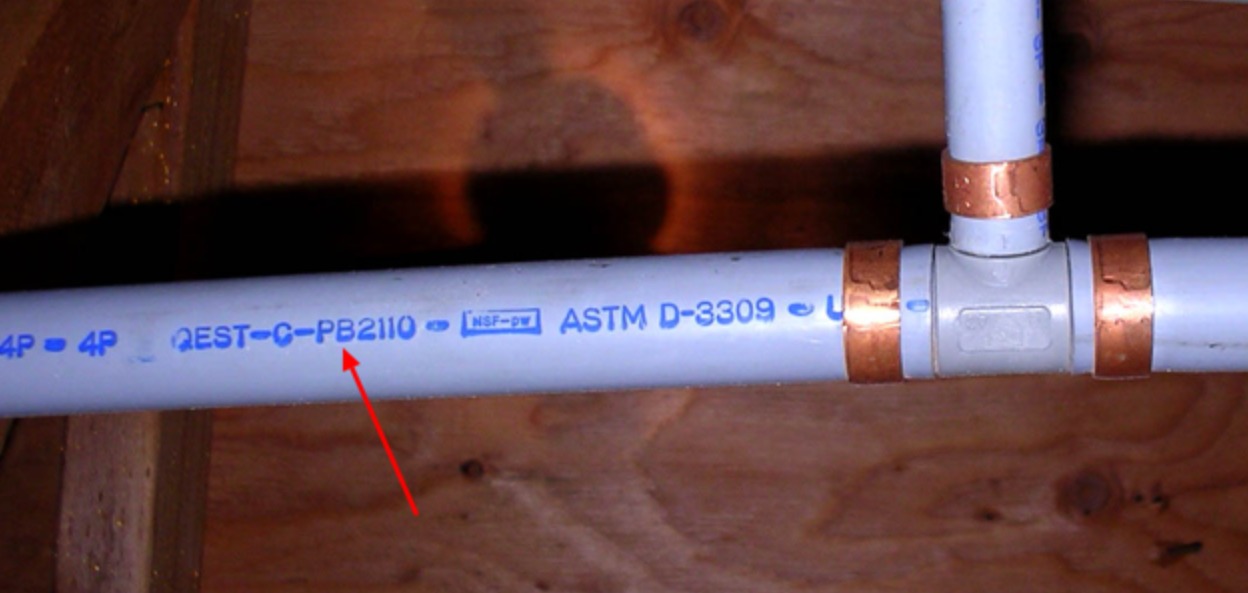
You can identify Qest pipe by looking near your water heater, under sinks, or at the main shutoff. It is a gray, flexible pipe (sometimes blue or black) usually stamped with “PB2110” on the surface. It is only used for water supply lines, not drains.
Here is why this matters for insurance: a $1.14 billion class action settlement once covered Qest pipe replacement, but that fund closed in 2009. No active lawsuits exist. Many insurance companies now refuse to cover homes with polybutylene, add water damage exclusions, or charge significantly higher premiums. If you still have Qest pipe, the replacement cost is on you. Typical whole-house repipes with PEX run $4,500 to $15,000 in DFW depending on home size.
Risk factors that should make you call your agent today
If any of these apply to your home, pick up the phone today and ask your agent about service line and water backup coverage. Do it before you need it.
- ✓Your home is 30+ years old. Cast iron lasts 50–75 years. Galvanized steel lasts 40–50 years. Original copper lasts 50–70 years. Homes from the 1980s and early 1990s are squarely in the failure window.
- ✓You have cast iron drain lines under the slab. Cast iron corrodes from the inside and eventually collapses. The number-one drain line failure we see in older DFW homes.
- ✓You have galvanized steel or original copper supply lines. Galvanized lines build up internal corrosion until water pressure drops and joints start leaking. Copper develops pinhole leaks from hard water exposure.
- ✓You have Qest (polybutylene) water lines. Built between 1978 and 1995 with gray, flexible pipe stamped PB2110? Chlorinated water destroys it from the inside.
- ✓Large trees sit near your foundation. Root intrusion is one of the most common causes of sewer line damage in North Texas.
- ✓Your home has a history of foundation movement. Expansive clay soil swells and shrinks, putting stress on every pipe running through and under your slab. Flower Mound, Argyle, and Denton are especially prone.
What we see in the field: typical DFW repair costs
We are not going to sugarcoat this. Slab leak repairs in the DFW area add up fast, and most homeowners are shocked by the numbers. Here is what the work actually costs, straight from our plumbing team.
“You never know if the slab is high tension or not. You hit a high tension cable, you’re paying a lot of money to get that fixed. And even on a regular slab, chopping through it, you are weakening your foundation.”
Ray Davison why his crew tunnels instead of jackhammering
The right approach is to go underneath and tunnel, then use a reputable excavation company that backfills with a stabilizing additive to strengthen the soil under the house. Safety requirements add cost: after 10 feet of tunneling, an engineering compaction report is required, two workers must be present at all times (one underground and one topside), and deeper tunnels need two points of entry in case of a collapse.
Without service line coverage, that entire pipe repair bill comes out of your pocket. With it, you are looking at $10,000 to $20,000 in coverage that cost you maybe $40 to $60 a year in premiums. That is one of the best insurance values available to a homeowner.
Exactly what to say when you call your insurance agent
This call takes five minutes. Here is what to ask:
- ✓“Does my policy include service line coverage? If not, can I add it and what does it cost?”
- ✓“Does my policy include water backup or sewer backup coverage? If not, can I add it?”
- ✓“What are my current coverage limits for water damage from a plumbing leak?”
- ✓“Does my policy have any exclusions for specific pipe materials like polybutylene or cast iron?”
- ✓“What is my deductible for a water damage or plumbing claim?”
Write down the answers. If your agent does not offer these add-ons, shop around. Most major carriers offer them, and plenty of independent agents in DFW carry policies that include them.
How to check for a slab leak yourself
Our plumber walks through the same basic test on every call. You can do the first step yourself before picking up the phone.
Turn off every fixture valve in your house. Close the valves under every toilet, under every sink. Stop any drips, any running toilets, anything that could be using water. Then go look at your water meter. If it is still moving, you have a leak somewhere in the system.
A plumber will take it a step further with a pressure drop test: they pressurize your entire system, put a gauge on, shut the water off, and watch. If the pressure drops, the leak is confirmed. From there, it is a matter of finding where.
“Usually it’s not even right away. Your high water bill, you might notice, oh, it’s high this month. Let’s hold off and see if it catches up. And then the next month, oh, it’s still high. That’s when they start saying okay, I might have an issue here.”
Ray Davison the most common first sign of a slab leak
Frequently asked questions
Will my homeowners insurance pay for slab leak repair?
Your standard policy will usually pay for the water damage (floors, walls, cabinets) if the leak was sudden. It will not pay for the pipe repair itself. Our plumbers estimate 95 to 98% of the time, the plumbing cost is not covered. For pipe repair coverage, you need a service line endorsement on your policy.
How much does it cost to add service line coverage?
Most carriers charge $2 to $5 per month for $10,000 to $20,000 in coverage — $24 to $60 per year. Given that even a basic tunnel repair in DFW starts around $2,500 and a full reroute can hit $15,000+, this is one of the best-value add-ons available on a homeowners policy.
Does the city cover pipes from the street to my house?
No. The city or utility maintains the main line in the street and typically covers pipes up to the property line or the meter. Everything from there to your house — including the water service line, the sewer lateral, and all plumbing under your slab — is the homeowner’s responsibility. This is true in Flower Mound, Lewisville, Denton, Argyle, and every DFW city we serve.
How do I know if I have Qest (polybutylene) pipe?
Look at your water supply lines near the water heater, under sinks, and at the main shutoff valve. Qest pipe is gray (sometimes blue or black), flexible (not rigid like PVC), and usually stamped with “PB2110” on the surface. If your home was built between 1978 and 1995, check. If you are not sure, a plumber can identify it in a few minutes during a routine inspection.
Why does my plumber recommend tunneling instead of jackhammering through the slab?
Jackhammering weakens your foundation, and there is a risk of hitting high-tension cables embedded in the concrete. Tunneling goes under the slab without disturbing it. The excavation company backfills with a stabilizing additive that actually strengthens the soil. It costs more upfront but protects your home’s structural integrity.
What are the signs of a slab leak?
The most common first sign is a high water bill that stays high for two months in a row. Other signs include warm or damp spots on the floor, the sound of running water when all fixtures are off, cracks in walls or flooring, or low water pressure that came on gradually. If you notice any of these in an older DFW home, do not wait.
Suspect a slab leak? Get eyes on it before it gets worse.
Christmas Air Conditioning & Plumbing serves Flower Mound, Lewisville, Argyle, Denton, and the surrounding DFW area. Call or text and we’ll get a Licensed Master Plumber on the way.
