When summer hits North Texas, a working air conditioner stops being a luxury and becomes a necessity. If you’ve found yourself searching for ac repair fort worth tx because your system is blowing warm air during a 100-degree afternoon, you’re not alone. Fort Worth summers regularly push past 90 degrees from June through August, with around 17 days a year climbing into the triple digits. That kind of relentless heat puts enormous strain on cooling systems, and small problems turn into emergencies fast.
This guide walks you through the most common AC issues local homeowners face, the warning signs worth watching, simple checks you can do yourself, and the clear moments when it’s time to call a licensed professional.
Why Fort Worth’s Climate Is Hard on Air Conditioners
Fort Worth sits in a humid subtropical climate, which means your AC isn’t just fighting heat, it’s fighting moisture too. Running nearly nonstop for months on end, systems here log far more operating hours than units in cooler regions.
That heavy workload leads to:
- Faster wear on compressors, fans, and motors
- Higher dust and pollen loads that clog filters and coils
- More frequent refrigerant and drainage issues from constant cycling
Because of this, proactive maintenance and timely repairs matter more in North Texas than almost anywhere else. A neglected system rarely makes it through a full Texas summer without trouble.
Common AC Problems Homeowners Face
Most cooling failures trace back to a handful of recurring issues. Knowing them helps you describe the problem accurately and avoid being upsold on repairs you don’t need.
1. AC Blowing Warm Air
One of the most common complaints is an air conditioner that runs but blows warm or room-temperature air. Typical culprits include:
- A thermostat set to the wrong mode
- A clogged air filter restricting airflow
- Low refrigerant from a leak
- A frozen evaporator coil
- A failing compressor
2. Weak or Reduced Airflow
If air is barely trickling from your vents, the issue is usually a dirty filter, blocked ductwork, or a struggling blower motor. Weak airflow forces your system to work harder, driving up energy bills and accelerating wear.
3. Strange Noises
Air conditioners should run with a steady hum. Grinding, squealing, banging, or rattling are signals worth taking seriously:
- Grinding or squealing often points to motor or bearing trouble
- Banging or clanking can mean a loose or broken internal part
- Hissing may indicate a refrigerant leak
4. Water Leaks or Pooling
A clogged condensate drain line is one of the most frequent causes of indoor water leaks. In Fort Worth’s humidity, drain lines collect algae and gunk quickly. Left unchecked, an overflow can cause water damage and mold.
5. Short Cycling
If your AC turns on and off rapidly without completing a full cooling cycle, that’s called short cycling. It wears out components fast and usually stems from an oversized system, a refrigerant problem, or a faulty thermostat.
6. High Humidity Indoors
A properly sized, healthy system removes humidity as it cools. If your home feels sticky even when the AC is running, the unit may be struggling or improperly sized for the space.
Simple Checks Before You Call for AC Repair Fort Worth TX Service
Before scheduling ac repair fort worth tx homeowners can run a few quick checks. Sometimes the fix is simple, and a little troubleshooting saves you a service call.
- Check the thermostat. Confirm it’s set to “cool” and the temperature is below the current room reading. Replace the batteries if it’s unresponsive.
- Inspect the air filter. A dirty filter is the single most common cause of poor performance. Replace it if it looks gray and clogged.
- Look at the breaker. A tripped breaker can shut the system down. Reset it once, but if it trips again, stop and call a pro.
- Clear the outdoor unit. Remove leaves, grass clippings, and debris, and make sure there’s at least two feet of clearance around the condenser.
- Check the condensate drain. If you see standing water near the indoor unit, the drain line may be clogged.
If these steps don’t restore proper cooling, the problem is likely beyond DIY territory.
When to Call a Professional
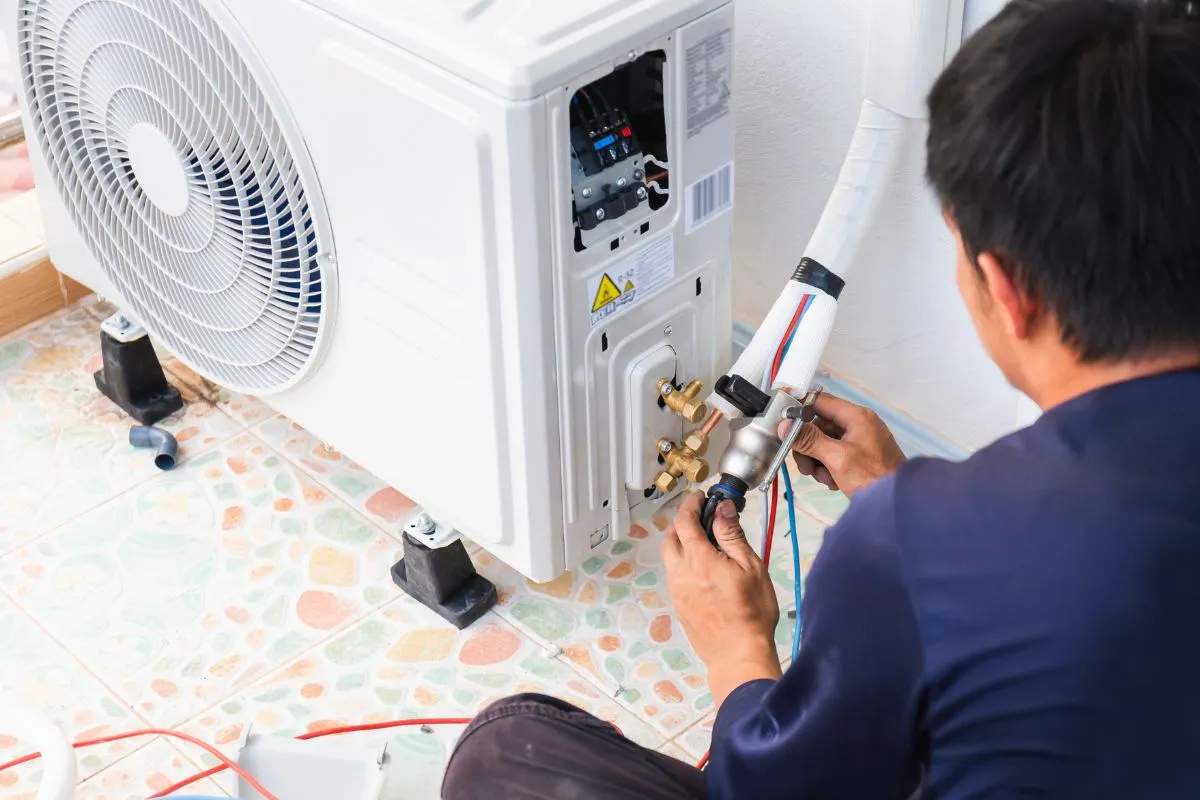
Some AC problems are safe to troubleshoot yourself. Others involve refrigerant, electrical components, or sealed system parts that legally and safely require a licensed technician. Call a pro right away if you notice:
- Warm air that persists after you’ve checked the thermostat and filter
- Burning smells or electrical odors, which can signal a wiring hazard
- Refrigerant leaks, identifiable by hissing sounds or ice on the lines (handling refrigerant requires EPA certification)
- Repeated breaker trips, which point to an electrical fault
- Loud mechanical noises like grinding or banging
- Water damage or persistent leaks around the unit
- A system that won’t turn on at all
Refrigerant in particular is not a DIY fix. Federal regulations require certified technicians to handle it, and improper charging can damage your compressor, the most expensive part of the entire system.
Repair or Replace? How to Decide
A frequent question Fort Worth homeowners ask is whether to repair an aging unit or replace it entirely. A helpful guideline is the rule of thumb that if a repair costs more than half the price of a new system, replacement often makes more financial sense.
Consider replacement when:
- Your system is more than 10 to 15 years old
- It uses R-22 refrigerant, which has been phased out and is expensive to source
- You’re facing frequent, costly repairs
- Energy bills keep climbing despite maintenance
Consider repair when:
- The unit is relatively young and well maintained
- The fix is minor and affordable
- It’s a one-off issue rather than a pattern
A trustworthy local technician will give you an honest assessment rather than pushing an unnecessary replacement.
How to Prevent AC Breakdowns in North Texas
The best repair is the one you never need. Given how hard systems work here, preventive maintenance pays off quickly. To keep your AC running through the worst of the Texas heat:
- Change filters every 1 to 3 months during heavy use
- Schedule a professional tune-up before summer arrives
- Keep the outdoor unit clear of debris and vegetation
- Flush the condensate drain periodically to prevent clogs
- Pay attention to early warning signs instead of waiting for a full failure
A spring tune-up is especially valuable in Fort Worth, where catching a weak capacitor or low refrigerant in April is far cheaper than an emergency call in July.
Why Choose a Local Fort Worth AC Repair Company
Hiring a local, licensed company has real advantages over a national chain or an unlicensed handyman. A local team understands North Texas conditions, can respond quickly during peak heat, and stands behind its work in the community it serves.
When choosing a contractor, look for:
- Proper licensing and insurance
- Transparent, upfront pricing with written estimates
- Strong local reviews and references
- Fast emergency response during heat waves
- Honest repair-versus-replace guidance
Christmas Air Conditioning & Heating, LLC proudly serves homeowners across Fort Worth and the surrounding communities of Justin and Flower Mound, with experienced technicians who know exactly what Texas summers demand from a cooling system.

Frequently Asked Questions
How much does AC repair cost in Fort Worth, TX? Costs vary widely based on the problem. Minor fixes like a capacitor or thermostat replacement are relatively affordable, while compressor or refrigerant work runs higher. A reputable company will provide a written estimate before starting any work.
How long does an AC repair take? Many common repairs are completed in a single visit of one to a few hours. More complex issues involving refrigerant or major components may take longer or require ordering parts.
Why is my AC running but not cooling? The most common causes are a dirty air filter, a thermostat issue, low refrigerant, or a frozen evaporator coil. Start with the filter and thermostat, and call a pro if cooling doesn’t return.
How often should I service my AC in North Texas? At least once a year, ideally in spring before the cooling season begins. Given Fort Worth’s long, intense summers, an annual tune-up helps prevent mid-season breakdowns.
Is it worth repairing an old air conditioner? If your system is over 10 to 15 years old and repairs are frequent or costly, replacement is often the smarter long-term investment. A newer system with the same issue is usually worth repairing.
Get Reliable AC Repair in Fort Worth Today
Texas heat doesn’t wait, and neither should you when your air conditioner starts struggling. Catching problems early, doing simple checks, and knowing when to call a professional can save you money and keep your home comfortable all summer long.
When you need dependable AC repair service, the team at Christmas Air Conditioning & Heating is ready to help. Our licensed technicians diagnose the problem quickly, explain your options honestly, and get your system back up and running.
Don’t sweat through another Fort Worth summer. Contact Christmas Air Conditioning & Heating today to schedule your AC repair or maintenance appointment and stay cool when the heat is at its worst.